Blue jeans are one of the most recognizable and enduring garments in the world. From their rugged origins in the 19th century to their status as a universal fashion staple today, blue jeans have a story woven into the fabric of modern culture. This article delves into the fascinating history and evolution of blue jeans, exploring their invention, global adoption, transformative moments, and lasting impact on fashion and society.
The Origins of Blue Jeans: Gold Rush to Garment Revolution
The history of blue jeans begins in the mid-1800s, during a period of rapid economic and industrial change in the United States. The story starts with two key figures: Levi Strauss, a Bavarian immigrant, and Jacob Davis, a tailor from Reno, Nevada.
In 1873, Levi Strauss and Jacob Davis patented the process of putting rivets in pants to strengthen points of strain, such as pocket corners. This innovation led to the birth of the first blue jeans, which were originally designed as durable workwear for miners during the California Gold Rush. The fabric of choice was denim, a sturdy cotton twill woven with indigo-dyed yarn. The iconic blue hue was both practical and distinctive—indigo dye was affordable and hid stains well.
.png) Key facts:
- Levi Strauss & Co. received U.S. Patent No. 139,121 for "improvement in fastening pocket-openings" in 1873.
- The first jeans were known as "waist overalls" and featured copper rivets for strength.
- Original blue jeans sold for approximately $1.50 a pair in the late 19th century.
Key facts:
- Levi Strauss & Co. received U.S. Patent No. 139,121 for "improvement in fastening pocket-openings" in 1873.
- The first jeans were known as "waist overalls" and featured copper rivets for strength.
- Original blue jeans sold for approximately $1.50 a pair in the late 19th century.
These early blue jeans were a revolution for laborers who needed clothing tough enough to withstand harsh conditions. The combination of functional design and rugged material set the foundation for the garment’s enduring appeal.
From Workwear to Pop Culture Icon: The 20th Century Transformation
While blue jeans began as utilitarian workwear, their cultural status underwent a dramatic transformation in the 20th century. After World War II, blue jeans became increasingly popular among American youth. Hollywood played a significant role in this shift—stars like James Dean and Marlon Brando donned jeans in films such as "Rebel Without a Cause" and "The Wild One," cementing jeans as symbols of rebellion and youthful independence.
By the 1950s and 60s, blue jeans were no longer confined to the workplace. They became the uniform of rock 'n' roll fans, beatniks, and eventually, the counterculture movements of the 1960s and 70s. The rise of designer denim in the late 1970s and 80s, with brands like Calvin Klein and Gloria Vanderbilt, brought jeans into the realm of high fashion.
Notable milestones: - In 1960, Levi Strauss officially began referring to their "waist overalls" as "jeans." - By 1973, Levi Strauss & Co. had sold over 200 million pairs of jeans. - In 1981, Brooke Shields famously declared, "Nothing comes between me and my Calvins," in a provocative ad campaign that drove denim sales to new heights.Blue jeans became a global phenomenon, transcending class, gender, and age. By the 1980s, jeans were being produced and worn worldwide—from American suburbs to European capitals and Asian metropolises.
Global Expansion and Cultural Adaptation
The spread of blue jeans around the world is a testament to their versatility and cultural resonance. During the Cold War, blue jeans were a symbol of Western freedom and individualism, coveted by youth behind the Iron Curtain. In the USSR, jeans were so rare that they became a form of currency among black market traders.
Today, blue jeans are worn in virtually every country, tailored to fit diverse cultural preferences and climates. The global denim market was valued at approximately $64.5 billion in 2022, with projections to reach $76.1 billion by 2026, according to Statista. Key producers include the United States, China, India, and Bangladesh.
Jeans have also adapted to local styles. In Japan, for example, denim craftsmanship has reached artisanal heights, with brands like Evisu and Momotaro Jeans renowned for their traditional dyeing and weaving techniques. In Africa, repurposed jeans are often transformed into new garments or accessories.
| Country | Noteworthy Denim Feature | Major Brands/Manufacturers |
|---|---|---|
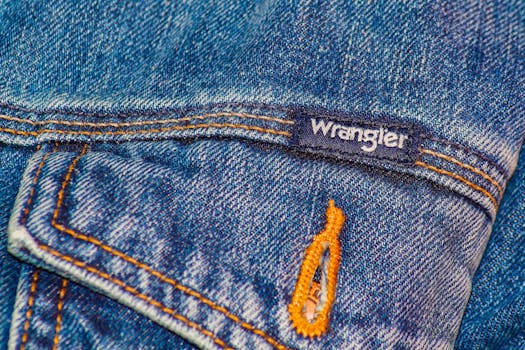
| United States | Origin of blue jeans; mass production | Levi’s, Wrangler, Lee |
| Japan | Selvedge denim, artisanal techniques | Momotaro, Evisu, Oni |
| Italy | Designer denim, premium fashion | Diesel, Replay |
| Bangladesh | Major exporter, large-scale manufacturing | Denim Expert Ltd., Envoy Textiles |
| Brazil | Innovative washes and fits | Colcci, Ellus |
Innovation and Diversification: The Modern Age of Jeans
The evolution of blue jeans didn’t stop at global adoption. In recent decades, innovation has driven the industry forward. Denim technology now includes stretch fibers for comfort, sustainable dyeing processes, and performance features such as moisture-wicking or antimicrobial finishes.
The 21st century has seen an explosion of styles, fits, and washes: - Skinny jeans surged in the 2000s, thanks to brands like J Brand and Uniqlo. - The "mom jeans" trend of the 2010s revived high-waisted, relaxed silhouettes. - Distressed denim, acid washes, and patchwork details reflect the ongoing appetite for customization.Sustainability is another major force reshaping the denim industry. According to the Ellen MacArthur Foundation, producing a single pair of jeans can use up to 3,781 liters (1,000 gallons) of water. In response, brands are developing eco-friendly manufacturing techniques—Levi's Water