.png)
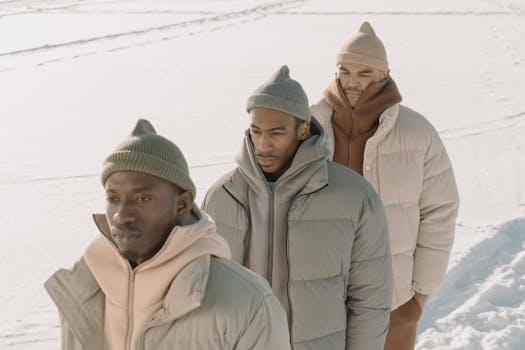
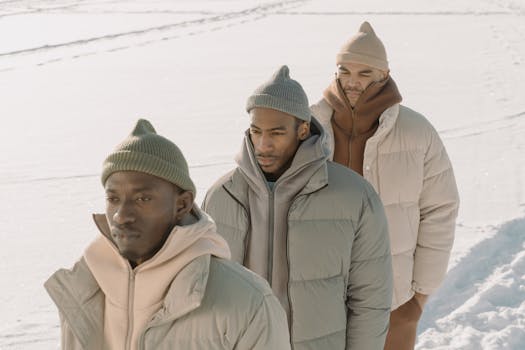
When selecting winter outerwear, it's essential to consider the unique properties and benefits of various materials to ensure comfort, warmth, and protection in cold environments. Here’s a closer look at the science behind these materials:
- Insulation Properties:
- Down: Known for its lightweight and highly compressible qualities, down is among the most efficient insulators. Its clusters create tiny air pockets that trap warm air, providing superior warmth. However, when wet, down loses much of its insulating capability, which is why it's often treated with water-resistant coatings or used in combination with waterproof outer shells.
- Synthetic Insulators: Materials like PrimaLoft and Thinsulate are synthetic alternatives that mimic down’s air-trapping abilities but maintain insulation even when damp. These materials are quick-drying and more resistant to moisture, making them ideal for wet climates.
- Waterproofing:
- Membranes and Coatings: Technologies such as Gore-Tex and eVent feature thin membranes with microscopic pores that block water droplets while allowing water vapor (sweat) to escape. This technology is crucial for keeping out rain and melting snow while preventing internal condensation and moisture build-up from sweat, which can lead to a decrease in insulation performance.
- Durable Water Repellent (DWR): Many outerwear pieces are treated with DWR finishes that cause water to bead up and roll off the fabric, enhancing the garment’s overall water resistance.
- Breathability:
- Effective breathability ensures that moisture vapor from the body can escape the garment, crucial for maintaining comfort during active use. Without good breathability, sweat can accumulate inside the garment, leading to dampness and a chilling effect.
- Advanced Technologies:
- Phase Change Materials (PCMs): These materials absorb, store, and release heat to maintain a constant temperature balance. PCMs can be integrated into fabrics to help regulate body temperature in varying climatic conditions, enhancing wearer comfort.
- Superhydrophobic Materials: Inspired by phenomena such as the lotus effect, where water droplets roll off lotus leaves, these materials prevent water from saturating the fabric by increasing the contact angle of water on the surface, making them exceptionally water-resistant.
- Construction Techniques:
- The design and construction of a garment play pivotal roles in its effectiveness. Features such as taped or sealed seams, waterproof zippers, and baffle designs in down jackets prevent cold spots and protect against wind and water penetration. Adjustable hoods, cuffs, and hems allow for better fit adjustments and help seal out the elements.
When choosing winter outerwear, consider your specific needs based on activity level and environmental conditions. For high-energy activities like skiing or mountaineering, prioritize breathable, moisture-wicking, and flexible materials. For more static activities in extremely cold environments, look for robust insulation and windproof capabilities. By understanding the science behind the materials, you can select outerwear that offers the best combination of protection, comfort, and durability for your winter adventures.